
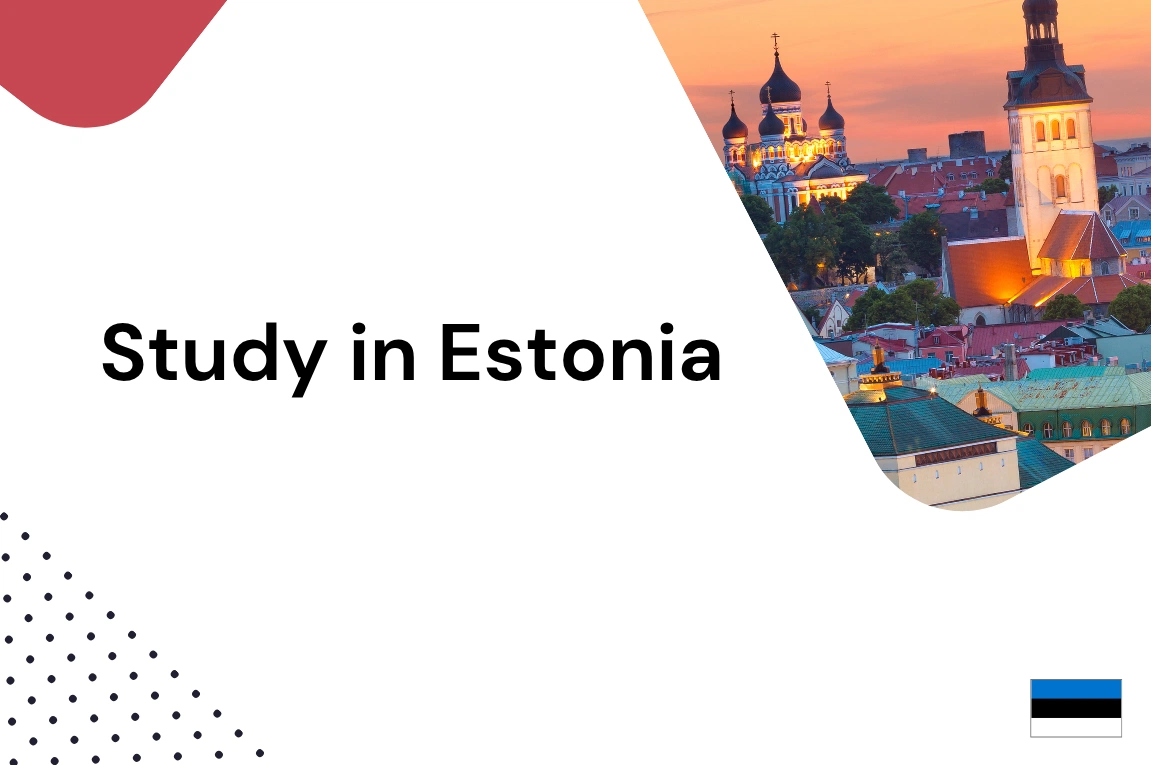
Studying in English in Estonia is an opportunity to join one of the world’s most advanced nations. Estonia is a small country in Northeastern Europe, in the Baltic region, bordered by Finland, Latvia, and Russia.
Estonia is notable for combining stunning natural beauty and breathtaking coastal locations with a blend of historical and modern contrasts. If you are considering studying here, you will find a diverse range of degree programs with a strong emphasis on technology and innovation.
At a Glance: Studying in Estonia
| Detail | Information |
|---|---|
| Capital | Tallinn |
| Major Cities | Tallinn, Tartu, Narva, Pärnu |
| Official Language | Estonian |
| Population | Approximately 1.3 million |
| Total Students | Around 45,000 (including over 5,000 international students) |
| Academic Year | Two semesters: Autumn and Spring |
| English Programs | Over 150 study programs offered in English across Bachelor's, Master's, and Doctoral levels |
| Listed Universities | Approximately 25 universities and higher education institutions |
| Ranked Universities | University of Tartu ranked among the world's top 300 universities in QS 2025 |
| Currency | Euro (€) |
| Time Zone | EET (UTC+2) / EEST in summer (UTC+3) |
Why Study in Estonia?
- Innovation and Technology Hub: Estonia leads Europe in innovation with its digital-first society, flat tax system, nationwide e-voting, and strong support for emerging technologies.
- Environmental Focus and Quality of Life: Over half the country is forested, with more than 1,000 islands and numerous lakes. Recognized by the WHO in 2011 as having the world’s cleanest air, Estonia offers Nordic standards, beautiful nature, and an eco-conscious lifestyle.
- High-Quality, International Education: Higher education dates back to 1632, with over 150 English-taught programs across all degree levels. Degrees are globally recognized, often with scholarships available.
- Universities promote internationalization by expanding English programs, partnering on global projects, and improving rankings.
- The Ministry of Education and Archimedes Foundation (established in 1997) facilitates student and researcher exchanges within and beyond Europe.
- Affordable Living and Education Costs: Monthly living expenses range from €300 to €550. Tuition for Bachelor’s and Master’s programs is €1,650 to €7,000 per year, while Doctoral programs are free for international students, making Estonia more budget-friendly than the US, Canada, or Australia.
Requirements for Study in Estonia
- Language of Programs: Many courses are offered in English. From 2014 to 2019, the share of international students increased from 5% to 12%, with most originating from Finland and Russia.
- Admission Requirements: Depending on the country of origin, completing the 11th or 12th grade is usually sufficient. Admission criteria include high school GPA, language test scores, and sometimes an interview or essay submission.
- Translated Documents: Academic documents must be translated into English or Estonian and authenticated by the school, a notary public, or with an Apostille stamp.
- Preparatory Courses: The University of Tartu offers a one-year Estonian language preparatory course, after which students can pursue tuition-free studies in Estonian.
- Tuition Fees: Educational costs range between $5,650 and $6,780 per year. Scholarships and state-funded places are available for talented students.
- Visa: To obtain a student visa, applicants must have a minimum of $6,780 in their bank account. Students from EU/EEA countries do not require a visa.
- Post-Study Work: Foreign graduates are given up to nine months to find a job in Estonia and extend their residency permit.
Top Universities in Estonia
| University Name | QS 2025 | THE 2025 | ARWU 2024 |
|---|---|---|---|
| University of Tartu | 358 | 301–350 | 601–700 |
| Tallinn University of Technology (TalTech) | 621–630 | 601–800 | – |
| Tallinn University | 1001–1200 | 1001–1200 | – |
- University of Tartu is the most prestigious and oldest university in Estonia, appearing in all three major ranking systems.
- TalTech (Tallinn University of Technology) is renowned in the fields of engineering, technology, and IT.
- Tallinn University primarily focuses on humanities, education, and social studies.
Higher Education in Estonia: Bachelor’s, Master’s, and PhD
In Estonia, higher education follows the Bologna System.
Bachelor’s Degree
- Duration: Typically three years (180–240 ECTS credits). Integrated programs (like Medicine) last 5–6 years and lead directly to a Master’s degree.
- Curriculum: Includes compulsory courses (major), elective courses, and optional courses.
- Structure: Some universities offer a minor specialization, allowing for unique combinations (e.g., Engineering + Psychology).
Master’s Degree
- Duration: Usually two years (60–120 ECTS credits). Can be completed in one year if the student previously completed a four-year Bachelor’s program.
- Admission: The Bachelor’s degree does not need to be in the exact same field, but you must demonstrate the necessary foundational knowledge.
- Final Work: Students write a thesis or complete a project. Internships are common due to close collaboration with research centers and commercial companies.
PhD Programs in Estonia (Doctoral Degree)
- Tuition: All Doctoral programs are free of charge and available in both Estonian and English.
- Duration: Four years (240 ECTS credits).
- Stipend: Doctoral students often receive a stipend ranging from $226 to $678 USD per month, as the research process is fully state-funded.
- Topic Selection: Students must select from pre-approved thesis topics proposed on the university’s website, which are chosen based on their importance to society and the country.
🩺 Studying Medicine in Estonia
Studying medicine is an attractive option, especially for non-EU students. Reputable universities, such as the University of Tartu, offer high-quality medical programs taught in English that are approved by European and international bodies.
The medical program usually lasts six years and includes theoretical instruction, lab work, and clinical internships. Upon completion, students receive a Doctor of Medicine (MD) professional degree.
Medical Admission Requirements
To be accepted into the medical program, applicants must have a high school diploma with strong grades in core science subjects (Biology, Chemistry, Physics). They must also provide an English language certificate, such as IELTS (with a minimum score of 6.0) or TOEFL. Some universities may also administer a separate academic entrance exam or conduct an interview.
Medical Tuition Fees
The average tuition fee for medical studies in Estonia is approximately €12,000 per year. Financial aid or scholarships are available for exceptional students.
International students have the opportunity to cover some of their living expenses by obtaining a part-time work permit. Upon graduation, pathways are available for post-study residency to enter the job market.
How to Apply to Estonian Universities
Students can apply to Estonian universities after completing high school. The average high school diploma grades should be at least 75% of the maximum possible score. Higher grades increase the chance of admission and scholarship consideration.
- Application Period: Applications are generally accepted only once a year, between April and July.
- Application Method: Submissions are made online through the Dream Apply portal. Applicants must upload scanned documents and a letter of motivation (SOP).
- Limits: Applicants can register for a maximum of 5 universities and 2 programs per university, all using a single common form.
- Interviews/Tests: After the initial submission, an online interview or internet-based tests are typically arranged.
Language Requirement for Study in Estonia
- English Programs: Require an IELTS or TOEFL certificate.
- Estonian Programs: You must take the Estonian language proficiency exam, Eesti keele tasemeeksam (EKT), and achieve at least a B1 level. This exam is free and held four times a year.
Required Application Documents (Bachelor’s Level)
- Completed application form on the university website.
- High school diploma + final transcripts.
- Passport copy.
- Proof of English proficiency (IELTS min. 5.5 / TOEFL iBT min. 72 or EKT Level B1).
- Statement of Purpose (SOP).
- Online interview and/or additional video tests.
Additional Documents (Master’s and PhD Levels)
- Bachelor’s / Master’s degree certificate + transcripts.
- Curriculum Vitae (CV).
- For Doctoral programs: A detailed research proposal.
Key Notes on Document Translation and Certification
When submitting the digital application, scans of the original documents and their official translations into English or Estonian must be uploaded. The translations must be certified in one of the following ways:
- By an official representative of the issuing educational institution.
- By a notary public.
- With an Apostille stamp.
✅ Legalization and Recognition of Qualifications
Estonia has signed mutual recognition agreements with Latvia, Lithuania, China, and Ukraine. Students from these countries do not need extra certification beyond translation.
Students from other non-EU countries must have their document translations certified using one of the three methods listed above. In complex cases, the selection committee may contact the organization responsible for the recognition of foreign qualifications, ENIC/NARIC (European Network of Information Centres/National Academic Recognition Information Centres), which can take up to 30 days.
Vocational and Technical Colleges in Estonia (VET)
In addition to traditional higher education, Estonia has over 30 different colleges where students can pursue Vocational Education and Training (VET). These include Vocational Schools (ametikool) and Vocational Education Centers (kutsehariduskeskus).
College programs are predominantly offered in Estonian and Russian, with fewer options available in English. Students studying in Estonian often dedicate an additional year to an intensive language preparatory course.
Students can enter college after completing the 9th or 11th grade:
- After 9th Grade: Leads to a Level 4 qualification (3 years, allows for university continuation).
- After 11th Grade: Leads to a shorter program and a Level 5 qualification (below a Bachelor’s degree).
Teaching and Research Careers at Estonian Universities
While familiarity with Estonian is highly recommended for academic roles, numerous English-language programs attract foreign faculty.
Monthly salary (USD) for any academic position in Estonia:
- Assistant: starting from $689
- Lecturer: starting from $817
- Associate / Assistant Professor: starting from $1,226
- Full Professor: from
For Master’s graduates focusing on research:
- Researcher: starting from $817
- Senior Researcher: starting from $1,226
- Principal Researcher: starting from $1,634
Free Education in Estonia
Bachelor’s and Master’s Tuition: €1,660–€7,500/year at public universities for international students; higher for non-EU/EEA or private institutions. Free at the Master’s level in some cases.
PhD Tuition: Free for all international students.
Estonian-Language Programs: Tuition-free at public universities for full-time students meeting ECTS progress (cumulative, e.g., 24 by first semester end) and B1 EKT proficiency (free exam, 4x/year).
Language Prep Courses: ~$1,356 USD/semester for a one-year program at the University of Tartu; other options vary.
Monthly Living Costs: €300–€550, covering:
- Accommodation: €80–€150 (dorms) or €200–€550 (private) + utilities/deposit.
- Food: ~€300.
- Transport: Free in Tallinn for students; €7– €8/month in Tartu.
- Other: €30–€70 entertainment; €64 residence permit; health insurance varies.
Scholarships and Study Grants for Study in Estonia
Scholarships and grants available at Estonian universities include:
- Dora Plus: Monthly scholarship ($395) for the best foreign Master’s students for one academic year.
- Doctoral Grant: Monthly amount of $746 provided to all PhD students.
- Tuition Waiver: Covers the entire tuition fee for the Bachelor’s or Master’s program for a few outstanding applicants annually.
- Field-Specific Scholarships: Providing $181 to $339 per month to the best students in strategic fields like engineering and IT.
- Estonian Ministry of Foreign Affairs Scholarship: Financial support ($452 per month) for non-EU students from specific partner countries.
Student Visa for Studying in Estonia
Non-EU students require a visa.
- Short-Term Courses (up to 3 months): Type C (short-term Schengen) visa.
- Studies up to 12 months: Long-term Type D (National) visa.
- Stays longer than one year: Must convert the D-visa to a Temporary Residence Permit (TRP) after entering Estonia.
The long-term visa application must be submitted in person. The visa fee is $113 (payable by card), and review takes up to 10 working days.
Required Documents for D-Visa:
- International passport (valid for at least three months after graduation).
- Completed and signed visa application form.
- 35×45 mm photograph.
- Medical insurance (minimum coverage of $33,900).
- Bank statement proving you have a minimum of $339 available per month.
- Confirmation of accommodation and university acceptance.
✅ Important Note on Residence Permits:
You can apply for the TRP directly at the embassy if your travel is more than four months away (cost: $73, takes 3–4 months). Otherwise, get a D-visa first and apply for the TRP at the Police and Border Guard Board after arrival (cost: $40). The TRP is valid until the end of your studies.
Cost of Studying in Estonia
University Tuition Fees
At Estonian state universities:
- Tuition for most Bachelor’s and Master’s programs: between €1,660 and €7,500 per year.
- Medical programs: approximately €12,000 per year.
- All Doctoral programs are free.
Student Living Expenses in Estonia
You will need approximately €300 to €550 per month.
Work Permit During Studies
International students holding a study residence permit are allowed to work in Estonia without needing a separate work permit, provided that the work does not interfere with their studies.
Final Note: Studying in Estonia, A Dream Realized
If you are looking for a reliable and legal way to immigrate to Estonia, pursuing higher education at the country’s accredited universities is one of the best available options. Studying in Estonia provides an exceptional opportunity for international students to continue their high-quality European education with affordable tuition and diverse scholarships. With numerous programs offered in English, straightforward admission processes, and an innovative, safe environment in which to live, Estonia has become an attractive destination.
FAQs
Yes, all Doctoral programs are free, and Bachelor’s/Master’s programs are free if studied in Estonian (with a minimum 30 ECTS per term).
The average monthly cost of living in Estonia ranges from approximately €300 to €550, excluding tuition fees.
Yes, students with a study residence permit can work without needing a separate work permit, provided it does not interfere with their studies.
Generally, a minimum of IELTS 5.5 or TOEFL iBT 72 is required for English-language programs.
Foreign graduates are allowed to stay for up to nine months after graduation to secure employment and extend their residency.
