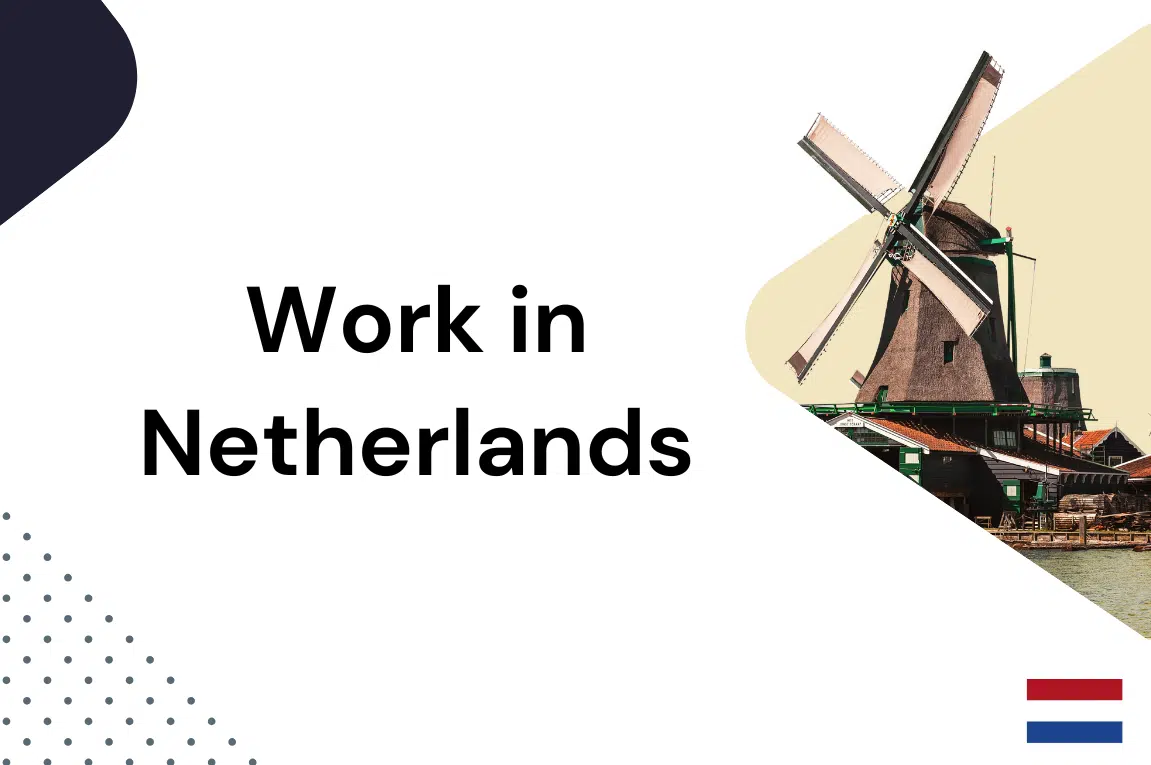
Every year, thousands of people from all over the world decide to work in Netherlands. The country offers strong job opportunities, a good quality of life, and an open, welcoming society. Many people also choose to immigrate to the Netherlands because of its stable economy, excellent healthcare system, and high living standards.
The Netherlands is one of the top destinations in Europe for international workers. Whether you are looking for a career in technology, healthcare, agriculture, or finance, real opportunities are waiting for you here.
Why Work in the Netherlands?
One of the biggest reasons people choose to work in Netherlands is the strong salary and benefit package that most jobs offer. Dutch employers are known for treating their workers well.
Here are some of the key benefits you can expect:
- Minimum wage: As of 2026, the Dutch minimum wage is approximately EUR 13.27 per hour for adults.
- Average salary: Most full-time workers earn between EUR 2,200 and EUR 4,500 per month before tax, depending on their job and experience.
- Paid holidays: Most employees get at least 20 paid holiday days per year, and many employers offer more.
- Health insurance: Workers in the Netherlands are required to have basic health insurance (called ‘basisverzekering’). Employers often help with the cost.
- Work-life balance: The Dutch are known for placing great value on personal time. Many jobs offer flexible hours and the option to work from home.
- Employee rights: Dutch law protects workers strongly. You have the right to fair contracts, safe working conditions, and protection against unfair dismissal.
Below is a simple overview of average salaries compared to estimated living costs:
Living costs can vary depending on where you live. Cities like Amsterdam and Utrecht are more expensive than smaller towns.
Can Foreigners Easily Find Jobs in the Netherlands?
This is one of the most common questions people ask before deciding to work in Netherlands. The answer depends on several factors.
Here is a realistic picture:
- Competition is real: The Dutch job market is competitive, especially in popular sectors like finance and law. However, there is strong demand in tech, engineering, and healthcare.
- Language barrier: Many Dutch workplaces use English, especially in international companies. However, learning some Dutch will always give you an advantage.
- High demand sectors: IT professionals, nurses, software engineers, and logistics workers are in high demand across the country.
- Qualifications matter: Dutch employers look closely at your education and experience. Make sure your certificates and degrees are recognized in the Netherlands.
- Reality check: Finding a job can take time. It is important to prepare a strong CV, write a good cover letter, and use platforms like LinkedIn and Work.nl.
The process may take several weeks or even months, but with patience and the right preparation, it is absolutely possible.
Salary in the Netherlands: What Can You Really Earn?
One of the main reasons professionals move to the Netherlands is salary stability combined with strong employee protections.
According to the Government of the Netherlands (Rijksoverheid), as of January 2026, the statutory minimum wage for adults aged 21 and over is approximately €13.27 per hour. This amount is reviewed regularly by the Dutch government.
Average gross monthly salaries (before tax):
- Entry-level positions: €2,200 – €2,800
- Mid-level professionals: €3,000 – €4,500
- Senior specialists: €5,000+
Important: These figures are gross salaries. The Netherlands uses a progressive income tax system, meaning higher-income earners are taxed at higher rates.
After income tax and social contributions, net income will be lower. However, workers benefit from strong public services, healthcare access, and pension contributions.
✅ Estimated Monthly Living Costs (Single Person)
- Amsterdam / Utrecht: €1,800 – €2,400
- Mid-sized cities: €1,500 – €2,000
- Smaller towns: €1,300 – €1,700
Housing is the biggest expense. Rent in Amsterdam can exceed €1,500 for a one-bedroom apartment. The Dutch housing market is currently competitive, and finding accommodation can take time. This is one of the most important realities to prepare for before relocating.
✅ The 30% Ruling: Major Tax Advantage for Expats
Highly skilled migrants may qualify for the 30% ruling, a tax benefit offered by the Dutch tax authorities.
If approved, up to 30% of your gross salary can be paid tax-free for a limited period. This significantly increases net income and makes the Netherlands financially attractive for international professionals.
Eligibility depends on salary thresholds and employer sponsorship. Applications must be submitted jointly by the employer and the employee.
This is one of the most important financial benefits for expats working in the Netherlands.
Who Can Apply to Work in the Netherlands?
Not everyone needs the same documents to work in Netherlands. It depends on where you come from.
- EU / EEA citizens: If you are from a country in the European Union or European Economic Area, you do not need a work permit. You can live and work in the Netherlands freely. You just need to register with your local municipality (called ‘gemeente’).
- Swiss citizens: Switzerland has a special agreement with the EU. Swiss nationals can also work in the Netherlands without a work permit.
- Non-EU citizens: If you come from outside the EU, you will need a work permit and usually a residence permit. Your employer in the Netherlands must apply for these permits on your behalf.
- Highly skilled migrants: If you have a specialized skill and a job offer with a salary above a set threshold, you may qualify for the Highly Skilled Migrant Permit, which is faster and simpler to process.
- International students: If you are studying at a Dutch university, you can work up to 16 hours per week without needing a separate work permit. During the summer months, you may work full-time.
How is Working in the Netherlands: Understanding Dutch Work Culture
Before you start to work in Netherlands, it helps to understand how Dutch workplaces operate. The Dutch work culture is quite different from that of many other countries.
▸ Direct communication
Dutch people are known for being very direct. If your manager thinks something can be improved, they will tell you clearly and politely. This is not rudeness. It is honesty, and it is valued here. For example, if you give a presentation and it has mistakes, a Dutch colleague may point them out right away. Do not take it personally.
▸ Flexible schedules
Many Dutch companies offer flexible working hours and hybrid work options. Part-time work is also very common and socially accepted, even for professionals. It is not unusual for a doctor or lawyer to work four days a week.
▸ Punctuality
Being on time is very important in Dutch culture. If your shift starts at 9:00 AM, you are expected to be there at 9:00 AM, not 9:10 AM. Being late without a good reason is seen as disrespectful.
▸ Equality at work
The Netherlands has a very flat work structure. This means that even junior employees can speak openly with managers and directors. Everyone is treated with respect. You are not expected to be overly formal or to use special titles when speaking to your boss.
Best Jobs for International Students in the Netherlands
If you are studying in the Netherlands and want to earn some money while you study, there are many good options.
Popular student jobs:
- Barista / Hospitality: €12 – €15 per hour
- Retail Assistant: €11 – €14 per hour
- Delivery Driver: €13 – €16 per hour
- Junior IT Support: €14 – €20 per hour
- University Research Assistant: €15 – €18 per hour
These jobs are widely available in Dutch cities and university towns. Many employers are happy to work around your study schedule.
Types of Work Permits in the Netherlands
If you are a non-EU citizen and want to work in Netherlands, you will need the right permit. Here is a simple explanation of the most common types:
Highly Skilled Migrant Permit (Kennismigrant)
This permit is for qualified professionals who have a job offer from a recognized Dutch employer. It is designed to attract talented people from outside the EU. The process is faster than a standard permit, and it comes with benefits like a faster path to permanent residency.
Single Permit (GVVA)
This stands for ‘gecombineerde vergunning voor verblijf en arbeid’, which simply means a combined permit for living and working. It covers both your right to stay in the Netherlands and your right to work there. It is the standard permit for most non-EU workers.
EU Blue Card
This is a European-wide permit for highly qualified non-EU professionals. To qualify, you need a university degree and a job offer with a high salary. It allows you to work and live in any EU country that accepts the card.
Orientation Year Visa (Zoekjaar)
This is a special visa for recent graduates from top-ranked universities. It gives you one year to look for a job or start a business in the Netherlands, without needing a job offer in advance.
Always check the official Dutch immigration authority website (IND.nl) for the latest requirements, as rules can change.
In-Demand Jobs in the Netherlands
Some sectors are growing fast in the Netherlands. If you are looking to work in Netherlands, here are the areas where employers are actively hiring:
- IT and software development
- Engineering (civil, mechanical, electrical)
- Healthcare and nursing
- Logistics and supply chain
- Technical trades
- Data science and cybersecurity
English is widely spoken in multinational companies and tech startups. However, learning Dutch significantly increases long-term career opportunities.
Reality check: finding a job can take several weeks or months. A strong CV tailored to Dutch standards and an optimized LinkedIn profile are essential.
Jobs in the Netherlands for English Speakers
Good news: you do not need to speak Dutch to find a job in the Netherlands. Many employers hire English-speaking workers every day. Here are some areas where English is commonly used:
- International companies: Many large multinationals have their European headquarters in the Netherlands. Companies like ASML, Booking.com, Heineken, Shell, and Philips regularly hire English-speaking professionals.
- Tech startups: Amsterdam and Eindhoven are home to fast-growing tech companies. Most of these companies work entirely in English and welcome international talent.
- Hospitality and tourism: Hotels, restaurants, and tourist attractions in cities like Amsterdam, Rotterdam, and The Hague hire many English speakers for front-of-house roles, guided tours, and customer service.
- Customer support: Many global companies based in the Netherlands have customer service teams that operate in English, German, French, Spanish, and other languages. These roles are excellent entry points for newcomers.
- Teaching: International schools and English-language tutoring services hire qualified teachers and instructors from around the world.
Final Note
The Netherlands is a great place to build a career and a life. If you are ready to work in Netherlands, the opportunities are real and the rewards are strong. The country offers fair wages, strong worker protections, and a culture that values balance between work and personal life.
If you are planning to immigrate to the Netherlands, the key steps are: find a job offer, check what permits you need, and register with the local authorities once you arrive. Every step is manageable with the right guidance.
The process may feel complex at first, but thousands of people successfully make the move every year. With good preparation and the right support, you can too.
If you need help with your application, an experienced immigration advisor can guide you through each step and help you avoid common mistakes.
FAQs
No, not always. Many companies work in English, especially in tech, finance, and international business. However, learning Dutch will open more doors for you over time.
Salaries vary by sector and experience. Entry-level workers typically earn EUR 2,200 to EUR 2,800 per month. Skilled professionals can earn EUR 4,000 or more.
EU citizens can arrive and look for a job without a permit. Non-EU citizens usually need a job offer before they can apply for a work permit. However, the Orientation Year Visa allows recent graduates to search for a job first.
This depends on the permit type. The Highly Skilled Migrant Permit can be processed in about two to four weeks. Standard permits may take several months.
As of 2026, the adult minimum hourly wage is approximately EUR 13.27. This is reviewed and adjusted by the Dutch government regularly.
Yes. If you are studying at a recognized Dutch institution, you can work up to 16 hours per week during the academic year, and full-time during summer.
Yes. The Netherlands is consistently ranked among the safest and most foreigner-friendly countries in the world. International communities are well-established in major cities.
Yes. All residents and workers in the Netherlands are required to have basic Dutch health insurance. Your employer may assist with the cost or provide guidance on how to sign up.