If your Canadian permanent residence application has been approved, you may receive a document called a Confirmation of Permanent Residence (COPR). It is an important milestone in your immigration journey, but receiving this document does not always mean you have officially become a Canadian permanent resident.
What happens next depends on whether you are inside or outside Canada.
For applicants abroad, the COPR is generally used to complete the permanent residence process when entering Canada. Applicants already in Canada usually confirm their status online and receive an electronic version called an eCOPR.
This guide explains what COPR means in Canada, who receives it, how to use it, when it expires, and what to do after receiving your confirmation.
What Is COPR in Canada?
COPR stands for Confirmation of Permanent Residence.
It is an official immigration document issued by Immigration, Refugees and Citizenship Canada (IRCC) to individuals whose applications for Canadian permanent residence have been approved.
The document is also identified by the form numbers IMM 5292 or IMM 5688.
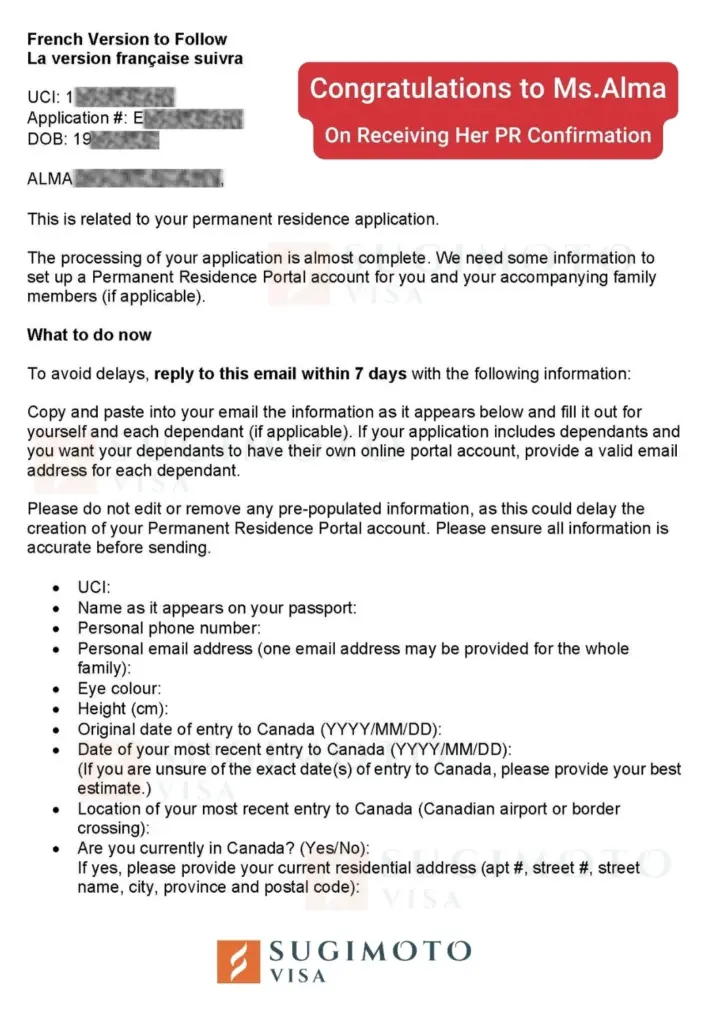
A COPR serves two important purposes:
- It confirms that IRCC has approved an individual’s application for permanent residence.
- Once the permanent residence process has been completed, it serves as official evidence of the person’s permanent resident status.
However, there is an important distinction between receiving approval and officially becoming a permanent resident.
An applicant outside Canada generally becomes a permanent resident only after completing the required immigration procedures at a Canadian port of entry.
An applicant already inside Canada generally becomes a permanent resident through the online confirmation process, after which IRCC issues an eCOPR.
Therefore, receiving a COPR and officially obtaining permanent resident status are not necessarily the same event.
For a broader explanation of Canadian permanent resident status, see our Canadian Permanent Residence guide.
Who Receives a Confirmation of Permanent Residence?
IRCC issues COPR documents to applicants whose permanent residence applications have been approved under eligible Canadian immigration programs.
These may include several immigration categories.
Express Entry Applicants
Applicants approved under Canada’s Express Entry system receive confirmation of their permanent residence approval.
Express Entry manages applications under three main federal immigration programs:
- Federal Skilled Worker Program (FSWP)
- Canadian Experience Class (CEC)
- Federal Skilled Trades Program (FSTP)
After IRCC approves the permanent residence application, the applicant follows the applicable confirmation procedure based on their location.
Provincial Nominee Program Applicants
Applicants who receive provincial nominations and successfully complete the federal permanent residence process may also receive a COPR.
Canada’s Provincial Nominee Programs (PNPs) allow participating provinces and territories to nominate eligible immigrants based on their economic and labour market needs.
A provincial nomination does not itself grant permanent residence. The applicant must still receive federal approval and complete the permanent residence confirmation process.
Family Sponsorship Applicants
Eligible spouses, partners, dependent children, parents, and other sponsored family members may receive a COPR after their applications are approved.
These applications fall under Canada’s family sponsorship programs.
The confirmation process depends on whether the sponsored person is physically inside or outside Canada.
Other eligible economic, family, refugee, and humanitarian immigration pathways may also lead to the issuance of a COPR.
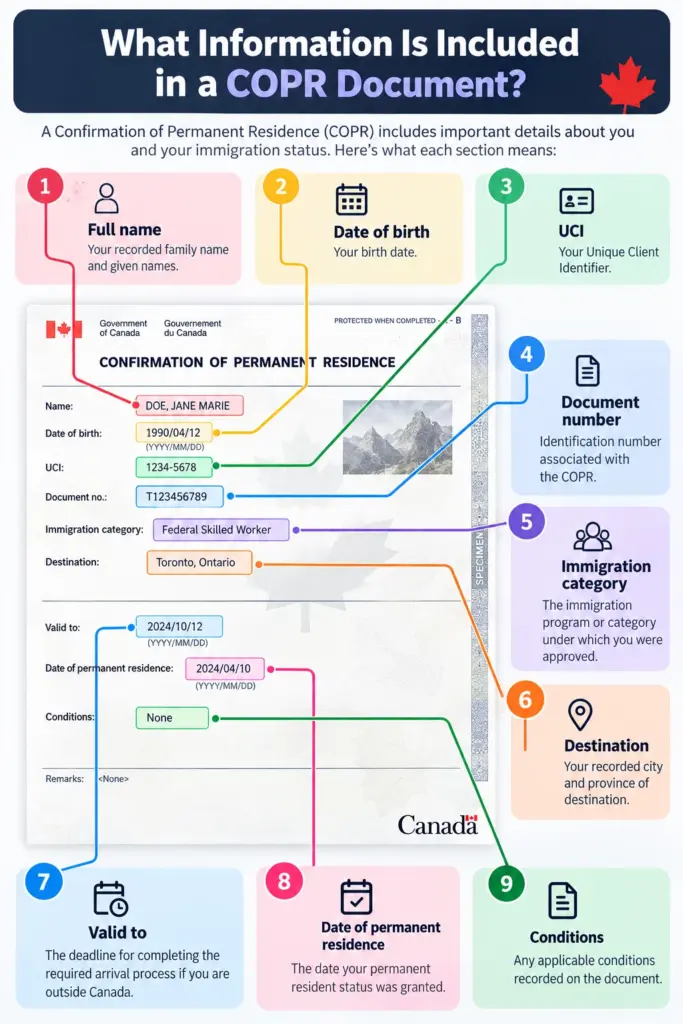
What Information Is Included in a COPR Document?
Your COPR contains personal and immigration-related information that helps IRCC and other Canadian authorities identify your immigration record.
The information may include:
| Information | Description |
|---|---|
| Full name | Your recorded family name and given names |
| Date of birth | Your birth date |
| UCI | Your Unique Client Identifier |
| Document number | Identification number associated with the COPR |
| Immigration category | The immigration program or category under which you were approved |
| Destination | Your recorded city and province of destination |
| Valid to | The deadline for completing the required arrival process if you are outside Canada |
| Date of permanent residence | The date your permanent resident status was granted |
| Conditions | Any applicable conditions recorded on the document |
Some fields are completed or updated when permanent resident status is officially granted.
Where Can You Find the COPR Number?
The COPR document number is printed on your Confirmation of Permanent Residence.
It is important not to confuse this number with your UCI or immigration application number.
These identifiers serve different purposes:
- UCI: Identifies you as an individual in IRCC’s immigration system.
- Application number: Identifies a particular immigration application.
- COPR document number: Identifies the confirmation document issued in connection with your permanent residence.
When completing immigration-related forms, make sure you enter the specific identifier requested.
How to Check Your COPR Information
Before using your COPR, carefully compare its details with your passport and immigration records.
Pay particular attention to your name, date of birth, passport information, immigration category, and validity date.
If your information is incorrect, contact IRCC or follow its official document amendment instructions. Do not attempt to modify the document yourself.
How Do You Get a COPR in Canada?
You do not normally submit a separate application specifically to obtain a COPR.
Instead, IRCC issues the document as part of the final approval and confirmation process for an eligible permanent residence application.
The procedure depends on your location.
Getting a COPR From Outside Canada
If you applied for permanent residence from outside Canada, the process generally follows these stages.
IRCC approves your permanent residence application.
IRCC completes its assessment and informs you of the decision.
You receive instructions regarding your immigration documents.
Depending on your nationality and circumstances, you may need to submit your passport or provide additional travel document information.
IRCC issues your COPR.
Applicants who require a visa to enter Canada generally also receive a permanent resident visa.
You travel to Canada before your documents expire.
You must arrive within the validity period specified by IRCC.
A border services officer completes the immigration process.
The officer verifies your identity, reviews your documents, and confirms that you remain eligible and admissible.
If everything is satisfactory, your permanent resident status is granted.
For applicants immigrating through Express Entry, IRCC provides additional instructions in its official guide for approved applicants outside Canada.
Getting an eCOPR From Inside Canada
Applicants who are already physically present in Canada generally complete the confirmation process online.
After IRCC approves the permanent residence application, it sends instructions for using the Permanent Residence Portal.
The procedure usually involves the following steps:
Step 1: Receive an email from IRCC.
IRCC contacts you to collect or confirm the information needed to finalize your permanent residence.
Step 2: Access the Permanent Residence Portal.
Follow the instructions provided by IRCC.
Do not create an additional account unless specifically instructed. IRCC may create an account for you or direct you to use an existing account.
Step 3: Confirm your physical presence in Canada.
You must confirm that you are currently inside Canada.
Simply submitting this declaration does not immediately grant permanent resident status.
Step 4: Receive your eCOPR.
Once IRCC finalizes your status, your electronic Confirmation of Permanent Residence becomes available in the portal.
Step 5: Provide your Canadian address and photograph.
These details are used to issue your first permanent resident card.
Importantly, IRCC cannot finalize your permanent resident status through this in-Canada confirmation procedure while you are outside Canada.
If you need to travel before receiving your eCOPR, contact IRCC using the instructions in your portal invitation.
Official reference: IRCC Permanent Residence Confirmation Portal.
COPR vs. eCOPR: What Is the Difference?
COPR and eCOPR have essentially the same purpose: documenting approval and confirmation of Canadian permanent residence.
The main difference is how they are issued and used during the final immigration process.
| Feature | COPR | eCOPR |
|---|---|---|
| Full name | Confirmation of Permanent Residence | Electronic Confirmation of Permanent Residence |
| Format | Typically issued as a document for the immigration process | Issued electronically |
| Common situation | Applicants completing PR confirmation upon entering Canada | Applicants confirming PR status inside Canada |
| How status is finalized | Usually through examination at a Canadian port of entry | Through IRCC’s online confirmation process |
| Proof of PR status | Yes, after the process is completed | Yes, after IRCC grants PR status |
| Replaces a PR card for commercial travel | No | No |
Neither document should be confused with a permanent resident card.
How Long Does It Take to Receive an eCOPR?
There is no single guaranteed processing time applicable to every applicant.
After you confirm your physical presence in Canada, IRCC may take up to a few weeks to make your eCOPR available.
The timing can vary depending on the application and processing circumstances.
If your confirmation is delayed, review messages from IRCC and check the Permanent Residence Portal.
Remember that an invitation to confirm your presence in Canada is not, by itself, proof that permanent resident status has already been granted.
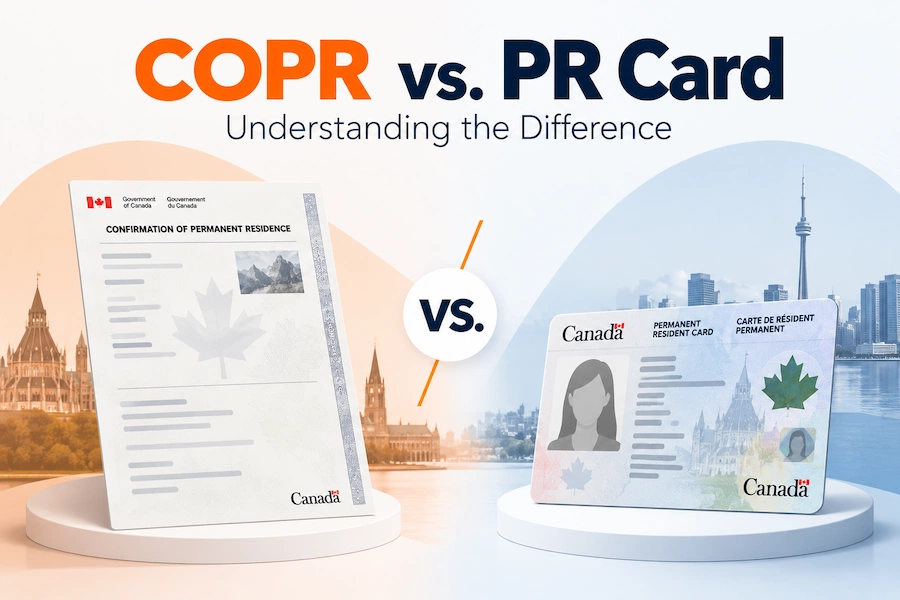
COPR vs. PR Card: Understanding the Difference
One of the most common questions among newly approved immigrants is whether a COPR is the same as a Canadian permanent resident card.
The answer is no.
Although both documents relate to permanent residence, they serve different purposes.
| Feature | COPR / eCOPR | PR Card |
|---|---|---|
| Issuing authority | IRCC | IRCC |
| Main purpose | Confirmation and evidence of permanent residence | Evidence of permanent resident status |
| When issued | During the final PR confirmation process | After permanent resident status is granted |
| Used for initial PR confirmation | Yes | No |
| Used to apply for a SIN | Yes, after PR status is granted | Yes |
| Generally required for return by commercial transport | Not sufficient by itself | Yes, unless an appropriate alternative travel document is obtained |
Do You Need a PR Card to Live and Work in Canada?
Once your permanent resident status has been officially granted, you do not need to wait for your physical PR card to begin living and working in Canada.
Your completed COPR or eCOPR can serve as proof of permanent resident status while your PR card is being processed.
For example, you can generally use your confirmation document to apply for a Social Insurance Number (SIN).
The SIN is needed for employment and various government programs in Canada.
However, you should not assume that receiving preliminary approval or an unsigned COPR automatically gives you permission to work before permanent resident status has been granted.
For a detailed explanation of card eligibility, renewal, and replacement, read our Canada PR Card guide.
How Long Is a COPR Valid?
The validity of your COPR is particularly important if you are outside Canada.
Your document contains a “Valid to” date, indicating the deadline by which you must arrive in Canada and complete the required permanent residence process.
You must travel to Canada on or before this date.
Can You Extend an Expired COPR?
IRCC states that a COPR cannot be extended.
If you are unable to travel before its validity date, you should contact IRCC and explain your circumstances.
Do not assume that an expired COPR remains valid for travel or that approval will automatically be reissued.
IRCC will determine what, if any, additional procedures are available in your situation.
Does Your COPR Expire After You Become a Permanent Resident?
The document’s initial travel validity should not be confused with the permanence of your immigration status.
After your permanent resident status has been officially granted, the completed COPR remains an important historical immigration document.
You should retain it even after receiving your PR card.
It may be useful when confirming your immigration history, requesting corrections, or completing other official applications.
A PR card’s expiry also does not automatically mean that a person has lost permanent resident status.
Permanent resident status is governed by separate legal requirements, including applicable residency obligations.
Can You Travel to Canada With a COPR?
Yes, a valid COPR is an important document for applicants travelling to Canada to complete their initial permanent residence process.
However, a COPR is not a passport, and it is not a substitute for all other required travel documents.
The documents you need depend on your circumstances.
Travelling to Canada for the First Time With a COPR
Applicants travelling to Canada for initial PR confirmation should generally carry:
- A valid passport or other accepted travel document
- Their valid Confirmation of Permanent Residence
- A permanent resident visa, if one was issued
- Proof of settlement funds, if required by their immigration program
- Other documents requested by IRCC
Visa-exempt applicants holding a valid COPR generally do not need a separate electronic Travel Authorization (eTA) for their initial journey to become permanent residents.
Applicants from visa-required countries generally receive the appropriate permanent resident visa.
If proof of funds applies to your immigration pathway, review our Canada Settlement Funds guide before travelling.
Can You Leave Canada After Receiving Your COPR?
The answer depends on whether you have already become a permanent resident.
If your application has been approved but your permanent resident status has not yet been finalized, leaving Canada may affect your confirmation process.
Applicants using the in-Canada PR Portal should notify IRCC if they plan to travel before receiving their eCOPR.
If you have already become a permanent resident, different travel document requirements apply.
Travelling Outside Canada Without a PR Card
After becoming a permanent resident, you generally need a valid PR card and passport or accepted travel document to return to Canada on a commercial carrier.
Commercial transportation includes airplanes, buses, trains, and boats.
If you are outside Canada without a valid PR card, you will generally need a Permanent Resident Travel Document (PRTD) to return by commercial transportation.
A PRTD is normally issued for a single entry.
Different documentary rules may apply when returning through a land border in a private vehicle.
A COPR alone should not be relied upon as sufficient documentation for boarding a commercial flight back to Canada after becoming a permanent resident.
What Happens After You Receive Your COPR?
Receiving confirmation of permanent residence is an important milestone, but several practical steps may still be necessary.
The following checklist will help you understand what to do next.
Step 1: Verify Your Immigration Documents
Check the accuracy of all personal information.
If you are outside Canada, confirm the validity dates on your COPR and any permanent resident visa.
Resolve document discrepancies before travelling whenever possible.
Step 2: Complete Your Permanent Residence Confirmation
If you are outside Canada, travel before your COPR expires and complete the required examination at a Canadian port of entry.
If you are inside Canada, follow IRCC’s online confirmation instructions.
Step 3: Provide Your Canadian Mailing Address
IRCC requires a Canadian mailing address to deliver your first PR card.
If you complete the landing process at a port of entry, you may provide your address to the border services officer or submit it to IRCC afterward.
Applicants confirming their status online provide their address through the Permanent Residence Portal.
Step 4: Complete the PR Card Photo Requirements
IRCC uses an appropriate photograph to produce your PR card.
For applicants who become permanent residents at a port of entry, IRCC generally uses the photo associated with the COPR and may request another photograph if necessary.
Applicants using the online confirmation process must upload a digital photo that meets IRCC’s requirements.
Step 5: Apply for Your Social Insurance Number
Once you have become a permanent resident, you can apply for a SIN.
A completed COPR or eCOPR can be used as supporting evidence of your permanent resident status.
Step 6: Arrange Healthcare and Settlement Services
Check the health insurance eligibility and registration procedures in your province or territory.
Depending on where you settle and your circumstances, you may also qualify for newcomer settlement services.
Step 7: Receive Your First PR Card
Most new permanent residents do not need to submit a separate application for their first PR card.
IRCC generally issues the card automatically when the required mailing address and photo are provided within 180 days of becoming a permanent resident.
If you do not provide these details within the required period, you may need to submit a PR card application.
Consult IRCC’s first PR card instructions for the applicable procedure.
Common COPR Problems and How to Handle Them
Even after a permanent residence application is approved, applicants may encounter document errors, delays, or travel difficulties.
The following situations require particular attention.
Your COPR Contains Incorrect Information
If your COPR contains an error, determine whether it can be corrected through IRCC’s document amendment process.
The appropriate procedure may depend on whether permanent resident status has already been granted and what information needs to be corrected.
IRCC provides a formal procedure for requesting amendments to eligible records when immigration officials made administrative errors.
Consult IRCC Guide 5218 for the applicable requirements.
You Have Not Received Your eCOPR
If you completed the online declaration but your eCOPR has not appeared, remember that IRCC may need additional time to finalize your status.
Check your portal account and relevant email messages.
If the delay is unusual or you face a time-sensitive issue, follow IRCC’s contact instructions.
You Lost Your COPR After Becoming a Permanent Resident
If you lose your completed COPR, you may be able to request a Verification of Status (VOS) document.
A VOS provides official information about your immigration history and status.
It is not the same as receiving a duplicate original COPR.
If you have not yet completed your initial immigration process and lose your COPR, contact IRCC before travelling.
Your Personal Circumstances Changed Before Landing
Significant changes in family circumstances may affect a permanent residence application even after approval.
Examples include marriage, divorce, the birth of a child, or other changes to family composition.
You should notify IRCC of relevant changes before completing your permanent residence process.
Failing to disclose material changes can create serious immigration complications.
COPR, AOR, and PR Card: Understanding the Immigration Timeline
Several documents appear at different stages of the permanent residence process.
Understanding their purpose can help applicants avoid confusion.
| Stage | Document or milestone | What it means |
|---|---|---|
| Application submitted | PR application | You have submitted an application for permanent residence |
| Application acknowledged | AOR | IRCC has acknowledged receipt of the application |
| Application approved | COPR or confirmation instructions | IRCC has approved your application |
| Status finalized | Completed COPR or eCOPR | You have officially become a permanent resident |
| Card issued | PR Card | You receive physical evidence of your PR status for travel and identification purposes |
An Acknowledgment of Receipt (AOR) is not proof that permanent residence has been approved.
Similarly, receiving an invitation to confirm your presence in Canada does not mean your status has already been finalized.
For more information about the earlier stage of processing, see our guide: What Is an AOR in Canadian Immigration?.
Frequently Asked Questions About COPR Canada
Not necessarily. A COPR confirms that your permanent residence application has been approved, but applicants outside Canada must complete the formal confirmation process upon entry before becoming permanent residents. Once the confirmation procedure is finalized, the signed COPR or issued eCOPR serves as official documentation of permanent resident status.
Yes. IRCC issues a COPR after approving an eligible permanent residence application. However, if you are outside Canada, you must complete the final landing procedure before your status officially takes effect.
Once you officially complete the landing process and become a permanent resident, your signed COPR or eCOPR serves as proof of status, allowing you to work in Canada without a work permit. However, holding a COPR alone does not authorize an overseas applicant to work in Canada prior to finalizing their permanent resident status.
There is no universal processing timeframe for receiving a COPR, as timing depends on the specific immigration stream, application circumstances, and final verification steps. For applicants inside Canada using the PR Portal, IRCC typically issues an eCOPR within a few weeks after physical presence in Canada is confirmed.
No. An eCOPR is proof of status inside Canada but is not valid for re-entry via commercial transportation (such as airplanes, buses, or trains). If you leave Canada after becoming a permanent resident but before receiving your PR card, you will generally need to apply for a Permanent Resident Travel Document (PRTD) to return by commercial carrier.
No. You should not attempt to finalize your permanent residence using an expired COPR without explicit instructions from IRCC. If you cannot travel to Canada before the validity date on your COPR expires, you must contact IRCC through the webform to request instructions.
No. Your first PR card is processed automatically once you officially become a permanent resident and provide a valid Canadian address and photograph within 180 days. A separate PR card application is only required if you fail to meet these requirements within the 180-day window.
If IRCC finalized your permanent residence through the online portal, your eCOPR will be available directly inside your Permanent Residence Portal account. Log into the account associated with your confirmation process to view and download the PDF document.
Your COPR is an important document that helps verify your original landed PR date and permanent residence history. However, applying for Canadian citizenship involves separate eligibility requirements (such as physical presence, tax filing, and language skills) and specific document instructions.
Final Thoughts: What Should You Do After Receiving Your COPR?
Receiving your Confirmation of Permanent Residence means you have reached one of the most important stages of the Canadian immigration process.
However, the steps that follow depend on your location and immigration circumstances.
If you are outside Canada, your priority should be verifying your documents, checking the validity date, and completing the required immigration procedures before your COPR expires.
If you are inside Canada, follow IRCC’s confirmation instructions, obtain your eCOPR, and provide the information needed for your first PR card.
In both situations, remember that COPR approval, permanent resident status, and possession of a PR card are three distinct concepts.
Understanding these differences can help you avoid travel disruptions, documentation mistakes, and unnecessary delays.
Need Help With Your Canadian Immigration Application?
Whether you are preparing a permanent residence application, navigating Express Entry, or reviewing your immigration options, understanding the requirements before applying can make the process easier to manage.
At Sugimoto Visa, we help applicants assess immigration pathways and understand the requirements relevant to their circumstances.
If you are considering Canadian permanent residence, you can start by completing our Immigration Assessment Form.
Disclaimer: This article provides general information about Canadian immigration procedures and does not replace individualized immigration advice. Requirements and procedures may change. Always consult IRCC’s current instructions for your specific situation.